Quartz vs. Quartzite vs. Granite in 2026: Which Countertop Wins for Bay Area Kitchens?
February 4, 20267 min readBy Best Countertops Team
We get this question on almost every estimate. Here's the no-jargon breakdown we give homeowners in person — what each stone actually does, what it costs, and which one tends to win for the way Bay Area families really cook.
If you're remodeling a kitchen in Walnut Creek, Concord, Pleasant Hill, or Martinez right now, three materials cover roughly 90% of the slabs we install: quartz, quartzite, and granite. They look similar in a slab yard. They behave very differently in a kitchen. Here is what 20+ years of fabricating and installing them across the Bay Area has taught us.
Quartz — the easy-care default
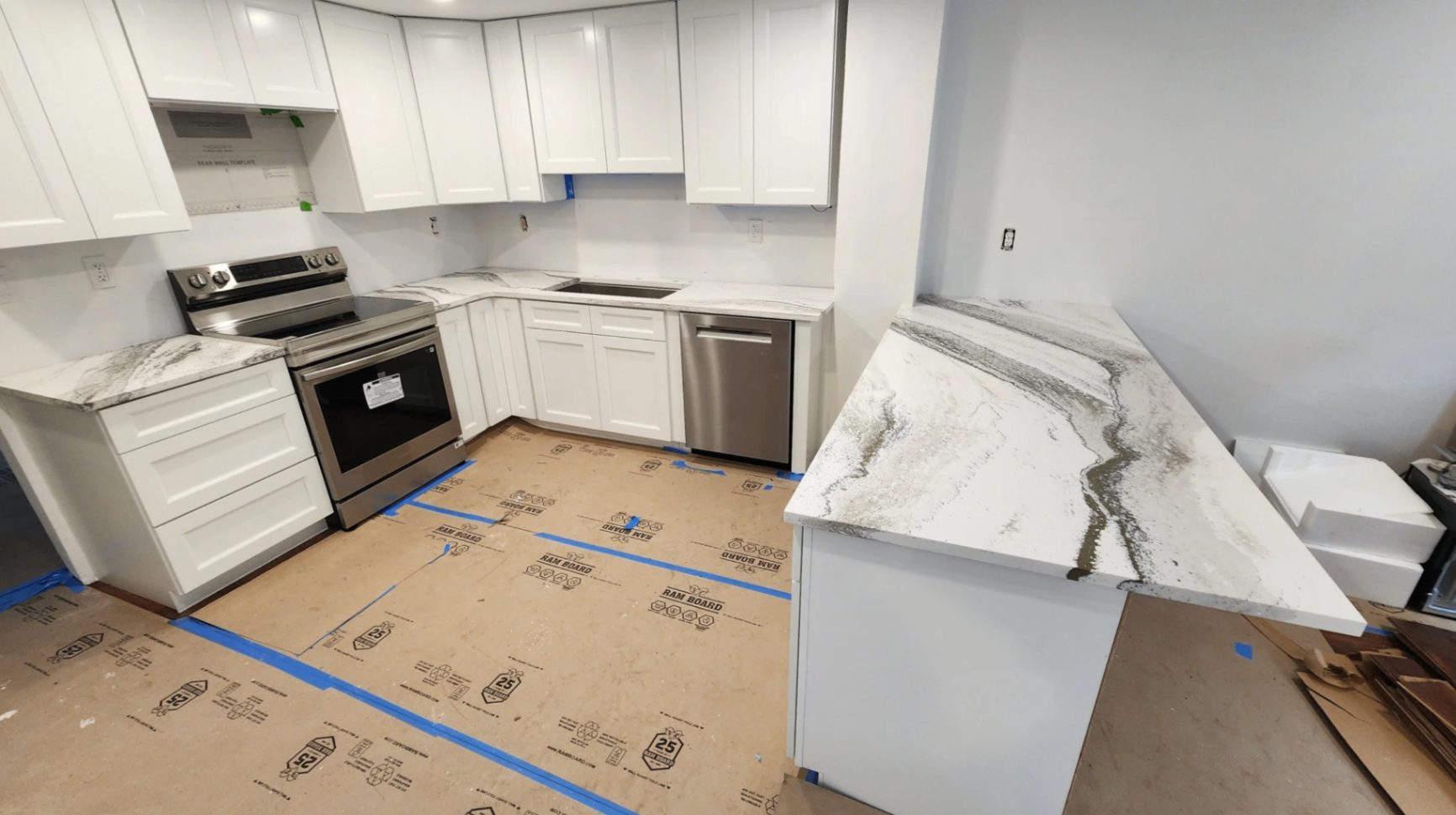
Quartz is an engineered stone: about 90–94% crushed natural quartz bound with resin and pigment. Because it's manufactured, the pattern is consistent slab-to-slab, it's non-porous (so no sealing, ever), and it shrugs off red wine, lemon juice, and toddler-grade chaos.
Best for: busy family kitchens, rentals, anyone who hates maintenance.
Strength: highly stain- and scratch-resistant. No sealing required.
Watch-out: not as heat-tolerant as natural stone. The resin binder can discolor or scorch starting around 300°F, so always use trivets — never set a pan straight off the burner on quartz.
Look: traditionally consistent, but 2026's quartz lines (Cambria, Caesarstone, Silestone Ethereal) now mimic marble veining convincingly.
Quartzite — natural stone, marble look, harder than granite
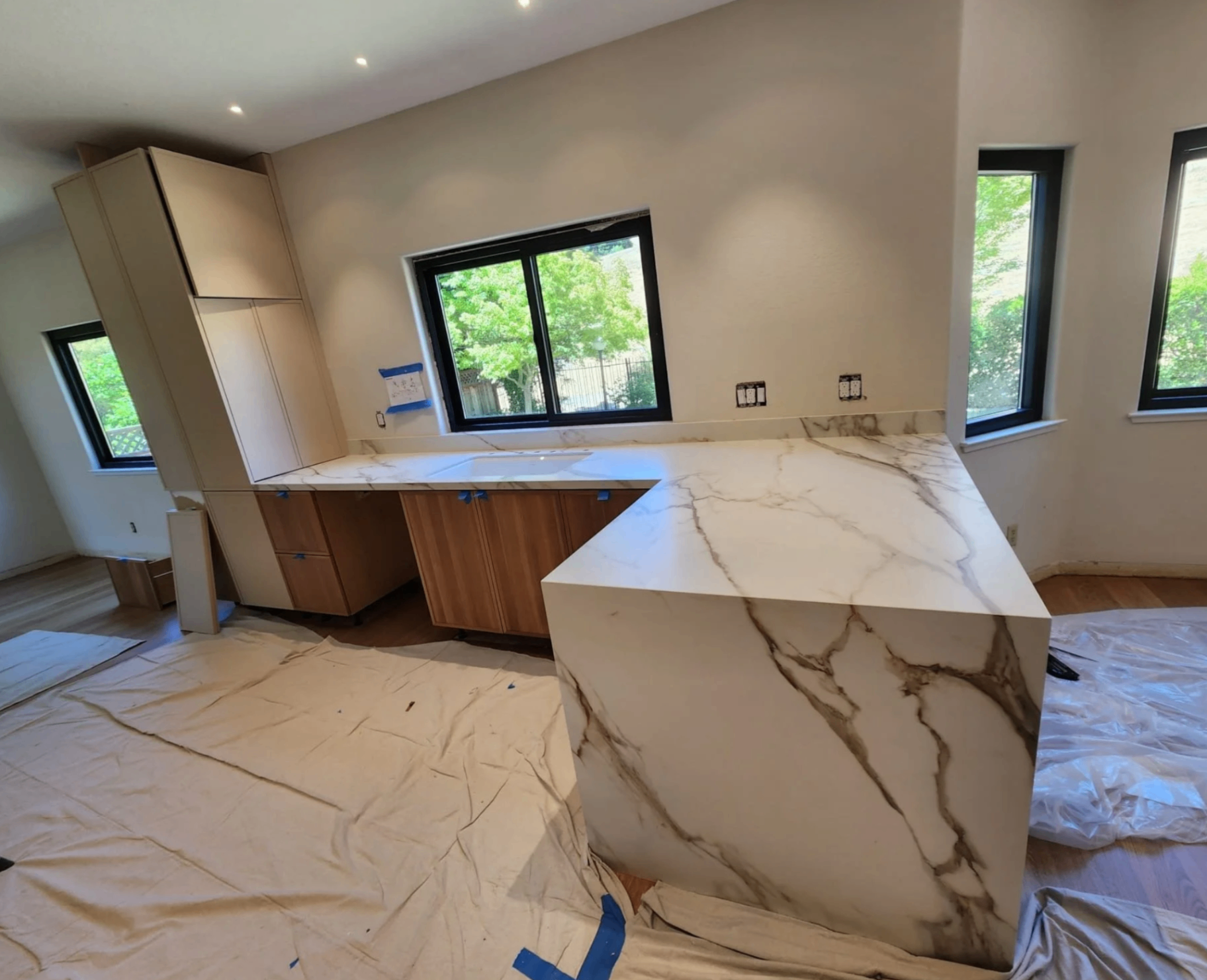
Quartzite is the one we're installing more of every year. It's a natural metamorphic stone — quartz-sandstone that's been compressed and heated for millions of years — so each slab is one-of-a-kind. It gives you the soft veining of marble without marble's softness. It's actually harder than granite on the Mohs scale.
Best for: homeowners who want a natural, statement surface but cook seriously.
Strength: heat-tolerant, very hard, dramatic veining no two kitchens share.
Watch-out: needs sealing once a year (a 10-minute job). Etching from acids is rare but possible on softer 'quartzite' that's actually marble — buy from a yard that tests, and ask us to confirm before fabrication.
Look: White Macaubas, Taj Mahal, and Mont Blanc are the big sellers in the Bay Area right now.
Granite — still the workhorse
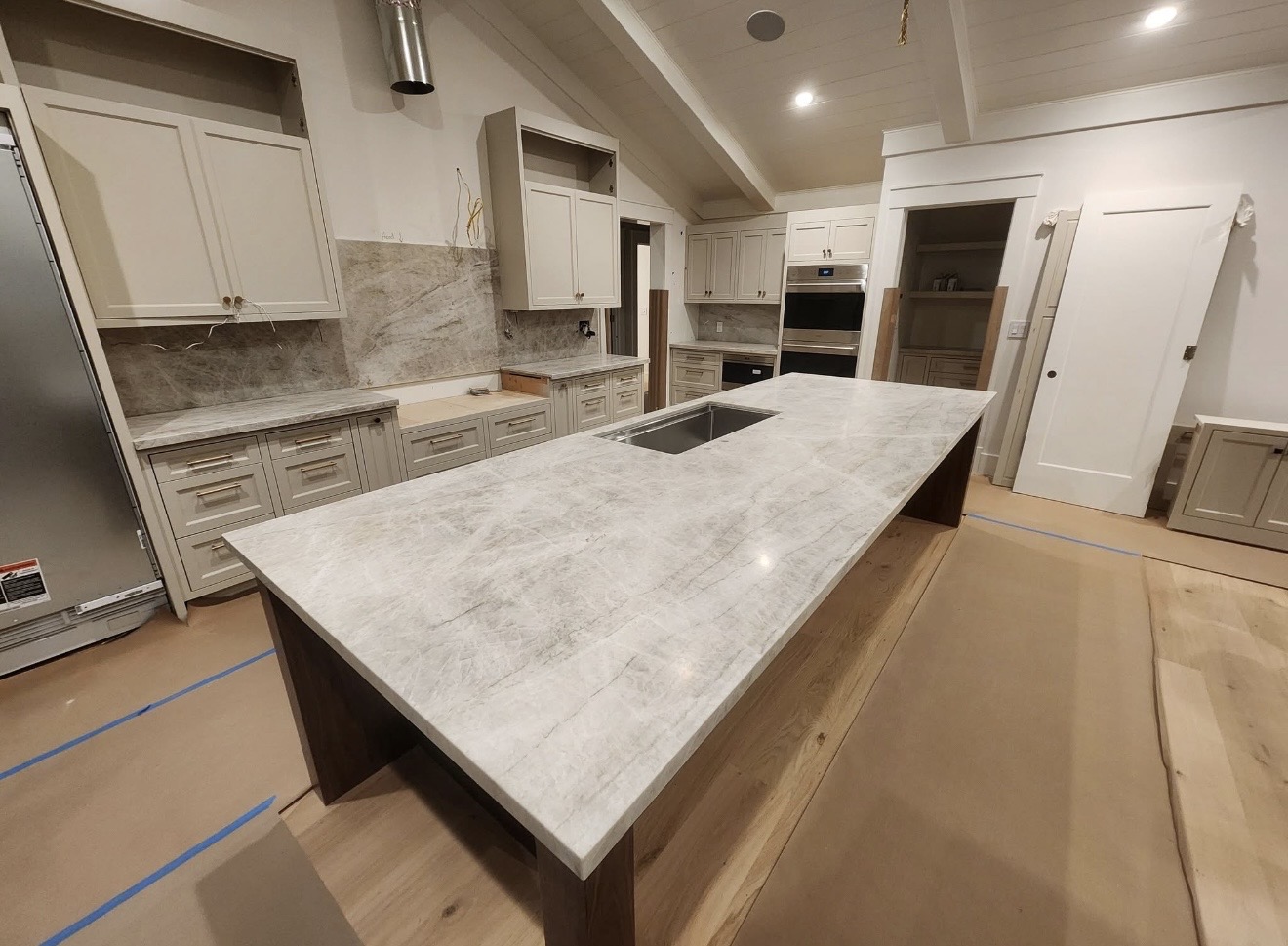
Granite quietly remains the most heat- and scratch-resistant of the three, and per square foot it's often the cheapest. The reason it's lost ground is aesthetic — the busy, speckled granite of 2005 fell out of fashion. But today's leathered and honed granite slabs (especially in soft whites, greys, and warm browns) look nothing like your parents' kitchen.
Best for: outdoor kitchens, BBQ surrounds, busy cooks on a tighter budget.
Strength: bulletproof against heat and scratches. Reseal every 1–2 years.
Watch-out: porous if unsealed; oil stains can set in.
Look: leathered finishes and soft-veined slabs are pulling granite back into modern kitchens.
Cost in the Bay Area, installed
Real 2026 ranges for a typical 45–55 sq ft kitchen in the Bay Area, installed by a local fabricator (templating, fabrication, edge profile, sink cutout, install, and haul-away of the old tops):
Granite: roughly $60–$110 per sq ft installed.
Quartz: roughly $75–$140 per sq ft installed.
Quartzite: roughly $90–$180+ per sq ft installed.
What we install most in 2026
Across our last 100 Bay Area installs: about 55% quartz, 30% quartzite, 12% granite, and the rest porcelain and marble. Walnut Creek skews more quartzite. Concord and Martinez skew quartz. Pleasant Hill is fairly even.
Whichever you lean toward, the right next step is the same: come look at full slabs in person. Showroom samples don't show the movement and tone of the actual stone you'll get. We'll walk you through what's in stock and what's worth ordering.
Frequently asked
Is quartzite really harder than granite?
Yes — true quartzite typically sits at 7 on the Mohs hardness scale; most granite is 6–6.5. The catch is that some slabs sold as 'quartzite' are actually dolomitic marble. A reputable fabricator can test and confirm.
Does quartz stain?
Very rarely. It's non-porous, so liquids don't soak in. The exception is prolonged exposure to harsh chemicals (oven cleaner, paint stripper) — those can damage the resin binder.
Can I put a hot pan on granite or quartzite?
Generally yes — both handle heat well. We still recommend trivets to protect any sealant on the surface and to prevent thermal shock on thin sections.
Free, no-pressure quote
Planning a countertop project in the Bay Area?
In-house fabrication since 2002. 1-year labor warranty on every install.
After templating hundreds of Bay Area kitchens this past year, we're seeing five clear trends shape what people are putting in their homes for 2026. The cool greys are out. Warm, organic, and dramatic are in.
Quartzite is the fastest-growing material in Walnut Creek kitchens — and the one homeowners most often worry about caring for. The good news: maintenance is much simpler than you think.